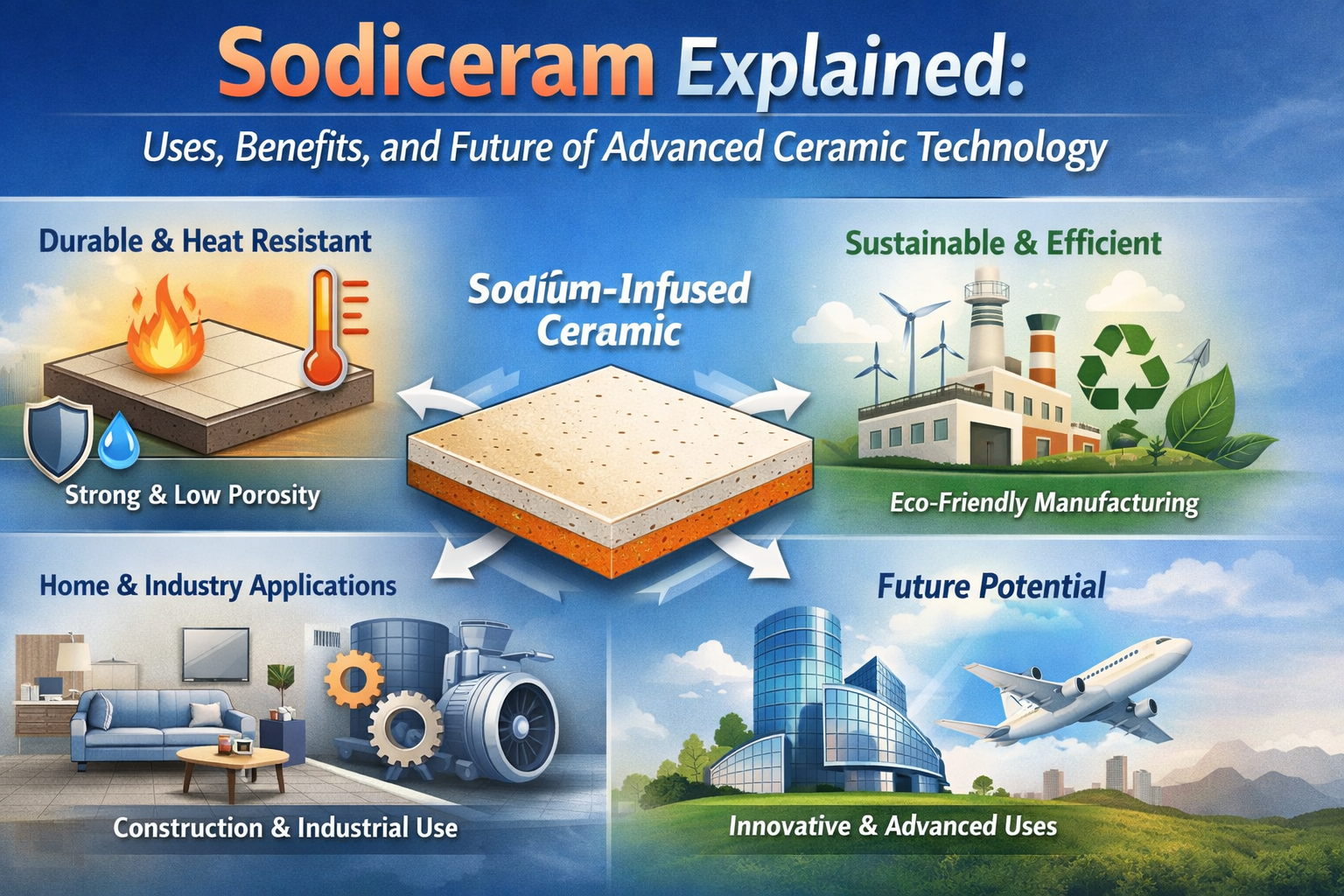
Modern construction and material science keep shifting toward stronger, longer-lasting, and more sustainable solutions. One name that has started gaining attention in both industrial and design circles is sodiceram. It refers to a new category of engineered ceramic materials designed to outperform traditional ceramics in strength, durability, and efficiency. As demand grows for materials that can handle extreme conditions without losing visual appeal, sodiceram is being used in everything from architectural design to industrial manufacturing.
Unlike conventional ceramics made only from clay and basic minerals, sodiceram combines advanced chemistry with modern production methods. The result is a ceramic material that offers better performance while still maintaining the familiar look and feel people expect from ceramic surfaces. Understanding how it works and where it fits can help builders, designers, and even homeowners make smarter material choices.
What sodiceram actually means and how it works
The term sodiceram comes from the combination of sodium and ceramic, reflecting its chemical foundation. It is an engineered ceramic material infused with sodium compounds such as sodium oxide or sodium silicate. These compounds play a key role during the manufacturing process by improving how the ceramic forms and hardens under high temperatures.
Traditional ceramics are created by firing clay at high heat until it becomes hard and durable. Sodiceram takes this process further by introducing sodium-based elements that enhance vitrification. Vitrification is the stage where the ceramic becomes glass-like and dense. With improved vitrification, sodiceram becomes less porous, stronger, and more resistant to environmental stress.
Because of this process, sodiceram can be produced at slightly lower firing temperatures while still achieving a dense and durable finish. This helps reduce energy use during manufacturing, making it more efficient to produce on a large scale.
Key material composition behind sodiceram
The performance of sodiceram comes from its carefully balanced composition. It typically includes:
- Silica for structural stability
- Alumina for hardness and heat resistance
- Sodium compounds for improved bonding and density
- Natural clay minerals for form and flexibility
Sodium compounds act as flux agents during firing. They help the raw materials melt and fuse more effectively, reducing internal gaps and weaknesses. This results in a ceramic structure that is stronger and more uniform than many traditional alternatives.
The composition also allows sodiceram to maintain stability under temperature fluctuations. This makes it suitable for environments where ordinary ceramics might crack or weaken over time.
Core features that make sodiceram stand out
Sodiceram is gaining popularity because it addresses many of the weaknesses found in traditional ceramic materials. Its structure and manufacturing process give it several practical advantages.
Some of the most notable features include:
- High strength and durability for long-term use
- Low porosity, which improves water resistance
- Heat and chemical resistance
- Smooth and refined surface finish
- Lightweight structure compared to some heavy ceramic options
- Consistent color and texture after firing
These features make sodiceram suitable for both decorative and heavy-duty applications. Whether used in interior design or industrial settings, it offers reliability without sacrificing appearance.
How sodiceram improves manufacturing efficiency
One of the reasons manufacturers are paying attention to sodiceram is its production efficiency. Traditional ceramics require extremely high firing temperatures and long processing times. The sodium content in sodiceram helps reduce these requirements.
Lower firing temperatures lead to:
- Reduced energy consumption
- Faster production cycles
- Lower production costs
- Less environmental impact
Because the material becomes dense and strong more easily, manufacturers can maintain quality while improving output. This balance between performance and efficiency makes sodiceram appealing for large-scale production.
Applications of sodiceram in construction and interiors
The construction and interior design sectors are among the biggest adopters of sodiceram. Builders and designers look for materials that can handle daily wear without losing visual appeal. Sodiceram fits well into this category.
Common uses include:
- Floor tiles in residential and commercial buildings
- Wall cladding for kitchens and bathrooms
- Exterior wall panels
- Decorative surfaces in modern interiors
- Countertops and functional surfaces
Because sodiceram resists moisture and staining, it works well in kitchens and bathrooms where traditional materials may degrade. Its strength also allows it to withstand heavy foot traffic in commercial spaces such as malls and office buildings.
Design flexibility is another advantage. Sodiceram can be produced in multiple finishes, textures, and colors, making it suitable for both minimal and luxury interiors.
Industrial and technical uses of sodiceram
Beyond architecture and design, sodiceram is also used in technical and industrial applications. Its ability to handle heat, pressure, and chemical exposure makes it useful in environments where metal or plastic may fail.
Industrial uses include:
- Machinery components exposed to heat
- Electrical insulation parts
- Aerospace and automotive components
- Laboratory surfaces and equipment
- Protective coatings for equipment
In some cases, sodiceram can replace metal components because it does not corrode easily and can withstand high temperatures without deformation. This makes it valuable in industries that demand reliability and long service life.
Environmental and sustainability benefits
Sustainability has become a major factor in material selection. Sodiceram offers several environmental advantages compared to traditional ceramic production.
These include:
- Lower energy consumption during manufacturing
- Reduced material waste due to improved efficiency
- Long lifespan, reducing replacement frequency
- Potential for recycling in certain applications
Because sodiceram products last longer, they reduce the need for frequent replacements. This helps lower overall resource consumption in construction and manufacturing projects.
As green building standards become stricter, materials like sodiceram are likely to gain more attention from architects and developers looking for efficient alternatives.
Why sodiceram is gaining global attention
The growing interest in sodiceram comes from a combination of performance and practicality. Industries are shifting toward materials that can handle stress while remaining cost-effective and visually appealing.
Several factors are driving its popularity:
- Rising demand for durable building materials
- Expansion of smart and sustainable construction
- Need for heat-resistant industrial materials
- Growth of modern interior design trends
- Focus on energy-efficient manufacturing
Sodiceram fits into all of these trends. It offers the strength needed for industrial use while maintaining the aesthetic flexibility required for design projects. This dual functionality makes it a versatile option across multiple sectors.
Comparing sodiceram with traditional ceramics
Understanding how sodiceram differs from traditional ceramics helps highlight its value. While both are ceramic materials, their performance levels vary significantly.
Traditional ceramics:
- Higher porosity
- Greater risk of cracking under stress
- Limited heat resistance
- Higher energy use during production
Sodiceram:
- Denser and stronger structure
- Better resistance to thermal shock
- Lower porosity and better moisture resistance
- More efficient manufacturing process
These differences explain why sodiceram is increasingly being chosen for modern construction and industrial use. It offers a balance between performance, cost, and sustainability that traditional ceramics often cannot match.
Future potential of sodiceram in modern industries
As technology advances, the role of sodiceram is expected to grow. Research into advanced ceramics continues to expand, and sodium-enhanced ceramics are likely to become more refined over time.
Future developments may include:
- Use in smart building materials
- Integration into energy-efficient systems
- Expanded use in transportation and aerospace
- Development of lighter and stronger variants
- Increased adoption in eco-friendly construction
With industries constantly searching for materials that combine durability and efficiency, sodiceram is positioned to remain relevant for years to come.
Conclusion
Sodiceram represents a shift in how ceramic materials are designed and used. By combining traditional ceramic foundations with sodium-based enhancements, it delivers stronger performance, improved durability, and better manufacturing efficiency. From modern architecture and interior design to industrial machinery and technical components, sodiceram continues to find new applications across different sectors.
Its low porosity, heat resistance, and long lifespan make it a practical choice for projects that demand reliability. At the same time, its production efficiency and potential environmental benefits align with current sustainability goals. As industries continue to evolve, sodiceram stands out as a material that bridges the gap between performance, design, and responsible manufacturing.
FAQs
What is sodiceram used for?
Sodiceram is used in construction, interior design, and industrial manufacturing. Common applications include tiles, wall panels, machinery components, and heat-resistant surfaces.
Is sodiceram stronger than traditional ceramic?
Yes, sodiceram is generally stronger and more durable due to its sodium-enhanced composition, which creates a denser and less porous structure.
Is sodiceram suitable for home interiors?
Sodiceram works well for flooring, walls, and kitchen or bathroom surfaces because it resists moisture, stains, and wear over time.
Why is sodiceram considered sustainable?
It requires less energy during manufacturing and lasts longer than many traditional materials, reducing waste and replacement needs.
Can sodiceram be used in industrial settings?3
Yes, sodiceram is often used in industrial environments because it can handle high temperatures, chemical exposure, and heavy use without losing strength.