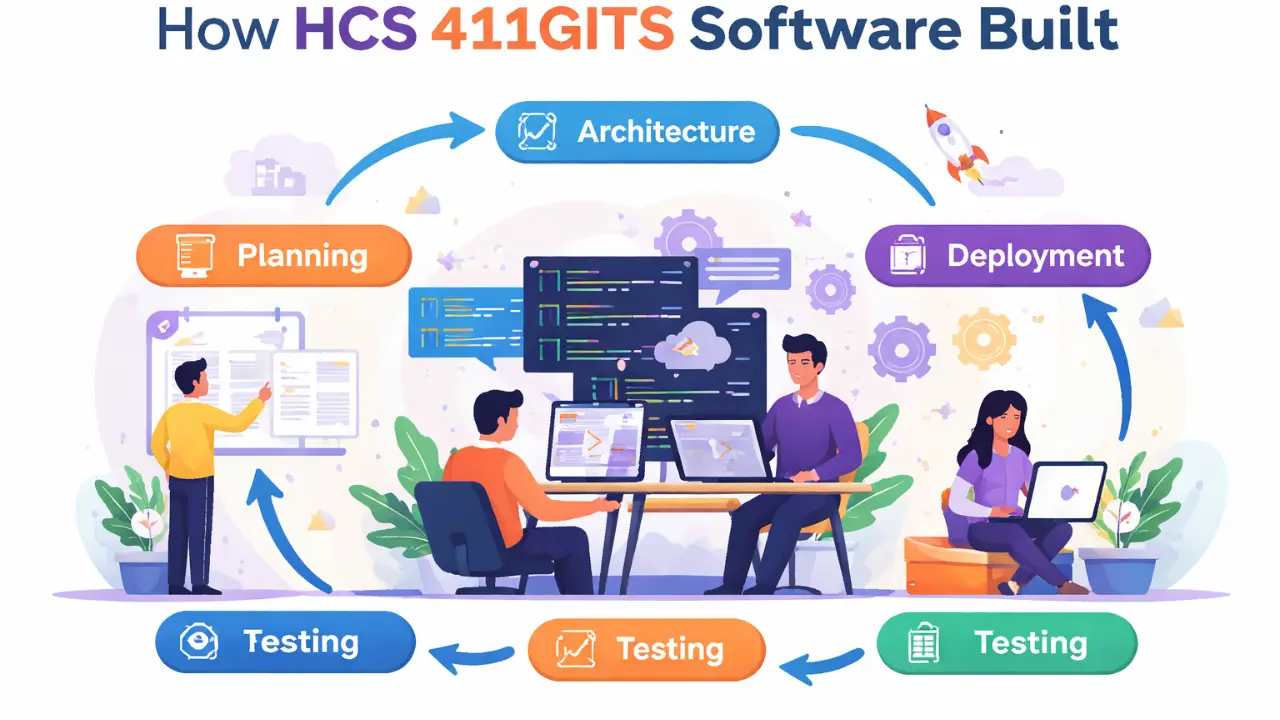
When users search for how hcs 411gits software builts, they usually want a clear and simple explanation. In easy words, HCS 411GITS software is explained online as a structured digital system designed to handle data, system logic, and workflows in an organized way. It is not described as a single small app. Instead, it is often presented as a complete system or framework built using modern software development practices.
The main reason HCS 411GITS software was built is to solve common problems found in traditional software systems. Older systems often become slow, difficult to update, and risky to change. HCS 411GITS software focuses on building the system in parts, so each part can work independently without affecting the whole system.
Planning and Requirement Analysis Phase of HCS 411GITS Software
The planning stage plays a very important role in how hcs 411gits software builts. Before any coding starts, developers spend time understanding what the software needs to do. This phase helps avoid confusion later and reduces errors during development.
During requirement analysis, developers ask simple but important questions. Who will use the software? What problems should it solve? How fast should it be? How secure should the data remain? These questions help shape the final structure of the software.
This phase usually involves collecting information from users, stakeholders, or system planners. The collected information is written down in clear documents. These documents act as a guide throughout the development process.
A simple view of this phase is shown below:
| Step | Purpose |
|---|---|
| Requirement gathering | Understand user needs |
| Analysis | Remove unnecessary features |
| Documentation | Create clear development rules |
| Validation | Confirm requirements are correct |
By spending more time in planning, the HCS 411GITS software build becomes smoother and more reliable. Many software failures happen because planning is rushed. This method avoids that mistake.
System Architecture Used in How HCS 411GITS Software Builts
System architecture explains how different parts of the software are arranged. In how hcs 411gits software builts, architecture is usually described as modular and layered. This means the software is divided into separate sections, each with its own responsibility.
Most explanations describe three main layers. The first is the user interface layer, which handles what users see and interact with. The second is the logic layer, which controls how the system behaves. The third is the data layer, which stores and retrieves information.
This layered design allows developers to update one part without touching the others. For example, changing the user interface does not affect how data is stored.
Here is a simple representation:
| Layer | Role |
|---|---|
| Interface layer | User interaction |
| Logic layer | Business rules |
| Data layer | Data storage |
This architecture is a key reason why HCS 411GITS software is considered stable and flexible. It reduces system crashes and makes updates safer.
Technology Stack and Tools Behind HCS 411GITS Software Build
The technology stack refers to the tools and programming languages used to build the software. In how hcs 411gits software builts, the stack is usually chosen based on reliability and performance rather than popularity alone.
Backend technologies handle system logic and data processing. Frontend technologies manage how the software looks and feels to users. Databases are used to store information securely. Version control tools help developers work together without losing progress.
The word “gits” in the name often points to git-based workflows. These workflows help track changes, manage versions, and fix mistakes quickly.
Using the right tools helps the software remain fast, secure, and easy to maintain over time. Poor tool selection can slow development and create future problems.
Development Process: How HCS 411GITS Software Is Built
The actual development process is where planning turns into working software. In how hcs 411gits software builts, developers usually work step by step instead of writing everything at once.
Each part of the software is developed separately and then connected. This reduces the chance of major failures. Developers review each other’s work to catch mistakes early. This teamwork improves overall quality.
Small improvements are added regularly instead of waiting for one big update. This makes the system more stable and easier to test.
A simple development flow looks like this:
| Phase | Description |
|---|---|
| Coding | Writing system logic |
| Review | Checking code quality |
| Integration | Connecting modules |
| Refinement | Improving performance |
This careful process helps ensure the final system behaves as expected.
Testing, Quality Assurance, and Error Handling
Testing is a critical part of how hcs 411gits software builts. Without testing, even well-written code can fail in real-world situations. Testing helps identify issues before users face them.
Different types of tests are performed. Some tests check individual functions. Others check how different parts work together. Performance tests ensure the system can handle heavy usage.
Error handling is also important. Instead of crashing, the system shows error codes or messages that help developers understand what went wrong.
This approach improves trust in the software and reduces long-term problems.
Deployment, Maintenance, and Continuous Improvement
Once the software is ready, it is deployed carefully. Deployment means making the software available for use. In how hcs 411gits software builts, deployment is often done in stages to avoid major failures.
After deployment, maintenance begins. Bugs are fixed, security updates are applied, and performance is monitored. Feedback from users helps guide future improvements.
The software is never considered finished. Continuous improvement ensures it stays useful as technology and user needs change.
Key Benefits of the HCS 411GITS Software Build Approach
The way HCS 411GITS software is built offers several long-term benefits. The system is easier to manage, safer to update, and more reliable during heavy use.
Some important advantages include:
- Better system stability
- Easier updates and maintenance
- Improved security
- Long-term scalability
A small case-style example helps explain this. A company using a modular system like HCS 411GITS can update features without shutting down the entire platform. This reduces downtime and improves user satisfaction.
In simple words, how hcs 411gits software builts focuses on building software that works today and remains useful tomorrow. The process values planning, structure, and steady improvement rather than quick results.
Conclusion
Understanding how hcs 411gits software builts helps readers see software development in a clearer and more practical way. Instead of thinking of software as something created all at once, this approach shows that good systems are carefully planned, structured, tested, and improved over time. The focus is not only on writing code, but on building a system that can handle change, growth, and real-world use without frequent failure.
Throughout this article, we explored how planning shapes the foundation, how modular architecture keeps the system flexible, and how the right tools and workflows make collaboration easier. The development and testing phases ensure that problems are found early, while deployment and maintenance keep the software stable after release. All of these steps together explain why people are interested in how hcs 411gits software builts and why this method is often discussed in modern software conversations.
In simple words, the HCS 411GITS software build approach is about thinking ahead. It values clarity over confusion and long-term performance over quick results. This makes it easier for developers to manage the system and for users to trust it over time.
Frequently Asked Questions (FAQs)
1.What does HCS 411GITS software mean?
HCS 411GITS software is commonly described online as a structured software system or framework built using modern development practices. The name itself sounds technical, but it usually refers to how the software is designed and built rather than a single simple application.
2.Why do people search for how hcs 411gits software builts?
Many people search this term because they want to understand the process behind the software. Instead of only knowing what the software does, they want to know how it is planned, designed, developed, and maintained over time.
3.Is HCS 411GITS software a single product?
In most explanations, HCS 411GITS software is not presented as one small product. It is usually explained as a system or framework that follows certain build principles, such as modular design, layered architecture, and controlled workflows.
4.What makes the HCS 411GITS software build approach different?
The main difference is its focus on structure and long-term stability. The software is built in parts, tested carefully, and improved continuously. This reduces errors and makes updates easier compared to traditional one-piece systems.
5.Is the HCS 411GITS software build approach suitable for large systems?
Yes, the way hcs 411gits software builts is often described as suitable for large or growing systems. Its modular nature allows it to handle more users, data, and features without major redesigns.
6.Does HCS 411GITS software require special tools?
The build approach usually relies on common modern development tools, such as version control systems, testing frameworks, and deployment tools. The key is not the tools themselves, but how they are used together in an organized way.
Read More: Supplement Information TheWeeklyHealthiness: A Complete Guide for Smart and Safe Supplement Use