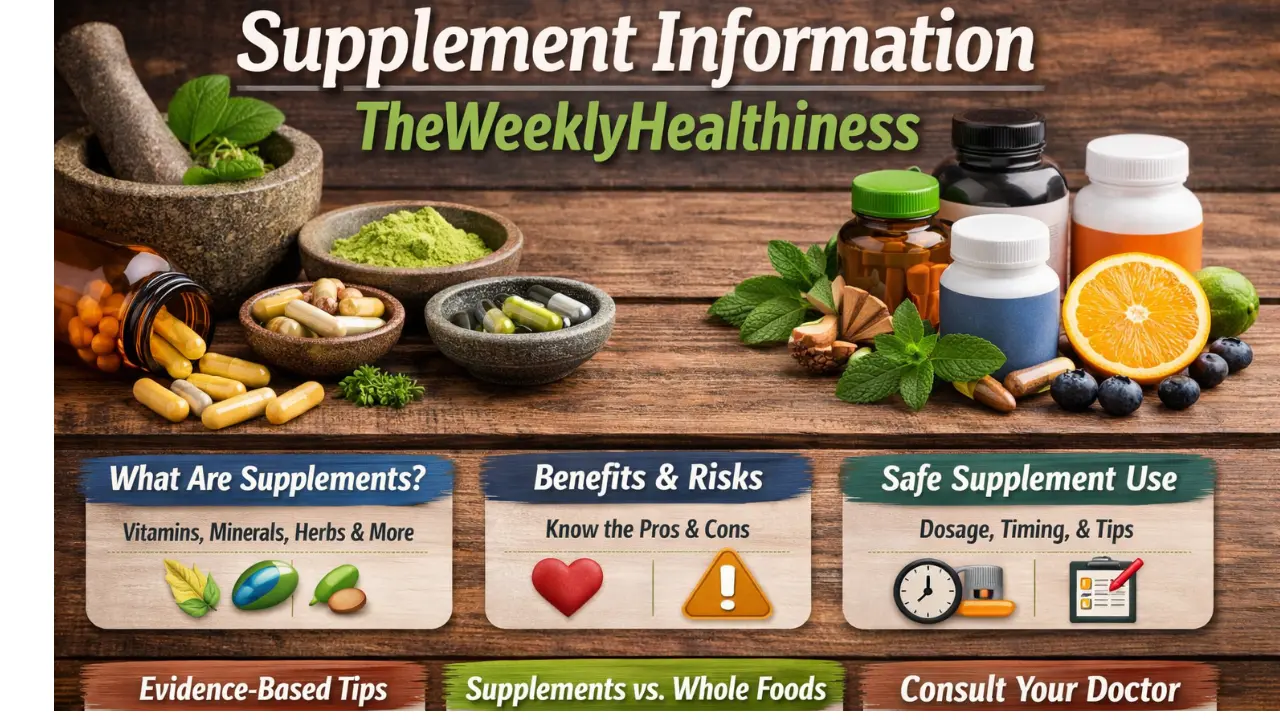
In recent years, supplements have become part of daily life for many people. Some take vitamins to feel more energetic, while others use minerals or herbal products to support immunity or digestion. With so many options available, people often feel confused about what supplements actually do and whether they are safe. This confusion leads many to search online for reliable guidance. That is where supplement information TheWeeklyHealthiness becomes useful.
Supplement information TheWeeklyHealthiness focuses on explaining supplements in a clear and simple way. It does not try to sell products or promote brands. Instead, it helps readers understand how supplements work, who needs them, and how to use them safely. The goal is to reduce misinformation and help people make better health choices.
What Is Supplement Information TheWeeklyHealthiness
Supplement information TheWeeklyHealthiness is an educational health resource that explains dietary supplements using easy language. It is designed for everyday readers, not medical professionals. The content focuses on learning, safety, and awareness rather than medical treatment.
This type of supplement information helps people understand what supplements are made for and what they are not meant to do. Supplements are intended to support the body, not replace meals or cure diseases. This simple idea is often missing from online health discussions.
Supplement information TheWeeklyHealthiness also explains common terms found on supplement labels. Many labels use complex words that confuse readers. By breaking these terms into simple explanations, people feel more confident about what they are consuming.
Another important part of this resource is responsibility. Readers are reminded that everyone’s body is different. What works for one person may not work for another. This is why general education is helpful, but personal medical advice should still come from healthcare professionals.
Why Supplement Information TheWeeklyHealthiness Matters Today
Today’s internet is full of health advice. Some of it is helpful, but much of it is misleading. Social media trends often promote supplements as miracle solutions. People may start taking products without understanding the risks. Supplement information TheWeeklyHealthiness matters because it brings balance to this noisy space.
More people are using supplements than ever before. Busy lifestyles, poor diets, and stress push people to look for quick support. Without proper information, this can lead to overuse or misuse. Clear supplement information helps prevent these problems.
A common issue is taking multiple supplements at once. People may combine vitamins, minerals, and herbs without knowing how they interact. Educational content helps readers understand why moderation and planning matter.
Here is a simple overview of why reliable supplement information is important:
| Reason | Explanation |
|---|---|
| Safety | Reduces risk of side effects |
| Awareness | Helps understand real benefits |
| Prevention | Avoids unnecessary supplements |
| Confidence | Helps readers make informed choices |
When people understand supplements better, they are less likely to fall for exaggerated claims. Knowledge creates safer habits and long-term wellness.
Types of Supplements Explaine
Supplement information TheWeeklyHealthiness explains different supplement types so readers know what category they are using. Not all supplements serve the same purpose, and understanding this makes a big difference.
Vitamins and Minerals
Vitamins and minerals are essential nutrients the body needs in small amounts. Some people do not get enough from food alone. Supplements can help fill those gaps when needed. However, taking more than required can cause problems.
Fat-soluble vitamins stay in the body longer, while water-soluble vitamins are excreted more easily. This is why dosage matters. Too much of certain vitamins can be harmful.
Herbal and Natural Supplements
Herbal supplements come from plants and have been used for centuries. While many people assume they are always safe, this is not always true. Herbs can interact with medications and may not suit everyone.
Supplement information TheWeeklyHealthiness encourages readers to treat herbal supplements with the same care as other products. Natural does not always mean risk-free.
Protein and Fitness Supplements
These supplements are popular among active individuals. Protein powders, amino acids, and performance products are often used to support workouts. However, most people can meet their needs through balanced meals.
Using fitness supplements without understanding them can lead to unnecessary intake. Education helps users decide if they truly need them.
Probiotics and Digestive Supplements
Probiotics support gut health, but not all products work the same way. Different strains serve different purposes. Supplement information TheWeeklyHealthiness explains why quality and relevance matter more than popularity.
Benefits and Risks of Supplements
Supplements can offer benefits when used correctly. They may support nutrient gaps, immune health, or specific needs. However, they also come with risks if misused.
Benefits often depend on consistency and correct dosage. Supplements are not instant solutions. They work slowly and support overall health rather than delivering dramatic results.
Risks arise when people take supplements without guidance. Side effects, interactions, and long-term overuse are common issues. Many people believe that taking more will bring faster results. In reality, excess intake can strain the body.
A simple fact to remember is that supplements are helpers, not heroes. They support healthy habits but cannot replace them.
How to Use Supplements Safely
Using supplements safely starts with understanding personal needs. Supplement information TheWeeklyHealthiness emphasizes that not everyone needs the same products. Lifestyle, diet, and health goals matter.
Reading labels carefully is essential. Labels show dosage, ingredients, and usage instructions. Skipping this step can lead to mistakes.
Timing also plays a role. Some supplements are better taken with food, while others work best on an empty stomach. Consistency matters more than quantity.
People with medical conditions, pregnant individuals, and older adults should be extra careful. Professional advice is always recommended in these cases.
Supplements vs Whole Foods
Supplement information TheWeeklyHealthiness strongly supports a food-first approach. Whole foods provide nutrients along with fiber, antioxidants, and other compounds supplements cannot fully replicate.
Supplements are meant to support diets, not replace meals. Relying too much on pills can lead to missing important nutrients found only in food.
There are situations where supplements make sense, such as dietary restrictions or diagnosed deficiencies. In these cases, supplements act as support tools rather than primary nutrition sources.
Balanced meals remain the foundation of good health. Supplements work best when added thoughtfully, not used as shortcuts.
How to Choose the Right Supplements
Choosing the right supplement starts with clear goals. People should ask why they want a supplement and what they expect from it. This helps avoid unnecessary purchases.
Quality matters more than quantity. Products with clear ingredient lists and proper dosage information are safer choices. Avoid products with exaggerated claims or unclear labeling.
Supplement information TheWeeklyHealthiness encourages readers to focus on simplicity. Fewer, well-chosen supplements are often better than many random ones.
Taking time to research and reflect leads to better outcomes and fewer regrets.
Final Thoughts
Supplement information TheWeeklyHealthiness exists to make health learning easier and safer. Supplements can be helpful tools when used correctly, but they are not magic solutions. Understanding their role is key to long-term wellness.
By learning the basics, reading labels, and focusing on balanced habits, people can use supplements wisely. Education reduces fear and confusion, allowing individuals to take control of their health in a calm and informed way.
Frequently Asked Questions (FAQs)
1.What is supplement information TheWeeklyHealthiness?
Supplement information TheWeeklyHealthiness is an educational health topic that explains dietary supplements in simple and easy words. It helps readers understand what supplements are, how they work, and how to use them safely. It is not medical advice and does not replace a doctor.
2.Is supplement information TheWeeklyHealthiness a trusted source?
Supplement information TheWeeklyHealthiness focuses on general awareness, safety, and basic knowledge. It aims to reduce confusion by explaining supplements clearly. While it is helpful for learning, readers should still consult healthcare professionals for personal medical decisions.
3.Can I take supplements daily based on supplement information TheWeeklyHealthiness?
Some supplements can be taken daily, but not everyone needs them. Supplement information TheWeeklyHealthiness explains that daily use depends on diet, lifestyle, and individual needs. Taking supplements without understanding dosage can lead to problems.
4.Are supplements always safe because they are natural?
No, natural does not always mean safe. Supplement information TheWeeklyHealthiness highlights that herbal and natural supplements can still cause side effects or interact with medicines. Proper knowledge and moderation are important.
5.Do supplements replace healthy food?
Supplements do not replace whole foods. Supplement information TheWeeklyHealthiness promotes a food-first approach, meaning supplements should only support nutrition, not act as meal replacements.
Read More: Menseekingmenindy A Complete and Easy Guide to Men Seeking Men in Indianapolis