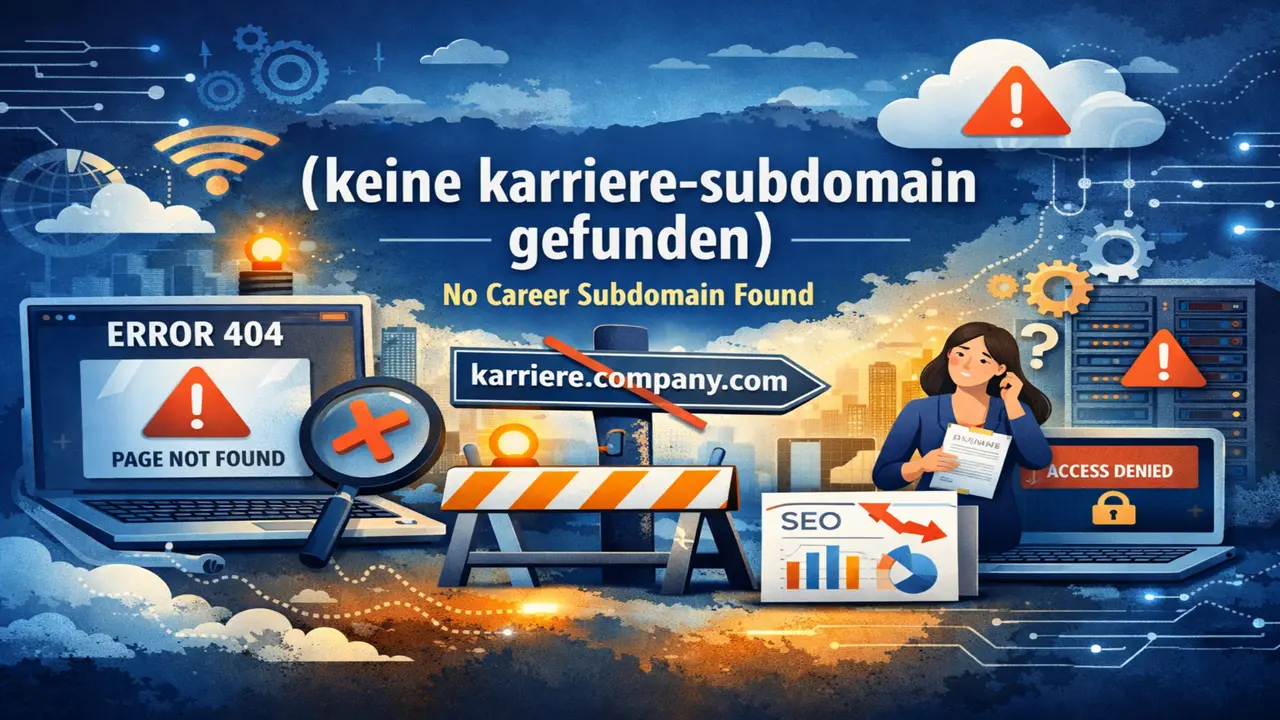
The phrase (keine karriere-subdomain gefunden) looks strange and confusing, especially for people who are not technical or do not speak German. In simple words, it means “no career subdomain found.” This message appears when a website is trying to open a career or jobs page, but that page does not exist or cannot be reached.
Many companies create a separate place on their website for job listings. Sometimes this is a subdomain like karriere.company.com. When the website or system searches for that career subdomain and cannot find it, the message keine karriere-subdomain gefunden is shown instead of a normal page.
Why This Message Confuses Users and Website Owners
This message confuses people because it does not clearly explain what is wrong. Job seekers may think the company is no longer hiring. Some users may think the website is broken or unsafe.
The confusion becomes worse because the message is often shown in German, even on websites that are not German. This happens when servers, tools, or content systems use default system language settings.
From the user’s side, common reactions include leaving the website quickly, losing trust in the company, or searching for the company on another platform. From the website owner’s side, it creates uncertainty about whether the problem is related to SEO, hosting, or website security.
When users cannot easily find career information, it creates a poor experience and lowers engagement.
How Career Subdomains Usually Work
A career subdomain is a separate section of a website used only for job listings. It often looks like karriere.company.com or careers.company.com. Some companies instead use a folder such as company.com/careers.
Both options can work well, but they must be configured correctly. A subdomain needs proper DNS records, server setup, and security settings. If any of these are missing, the subdomain cannot be found.
Here is a simple comparison to understand the difference:
Career subdomain
Used by large organizations
Requires technical setup
Looks separate from the main site
Career folder
Easier to manage
Part of the main website
Common for small businesses
If a company removes its career subdomain or switches to an external hiring platform without updating links, the system may still look for the old subdomain and show the error.
Common Technical and SEO Reasons Behind the Error
There are several common reasons why (keine karriere-subdomain gefunden) appears. Most of them are related to setup issues and not major failures.
One common reason is missing DNS records. If the career subdomain does not exist in the DNS settings, browsers and search engines cannot find it.
Another reason is server configuration problems. The DNS may exist, but the server is not set to respond to that subdomain.
Security settings can also cause issues. If the SSL certificate does not include the career subdomain, the page may fail to load properly.
Old or broken links are another frequent cause. When companies change their career system and forget to update links, visitors are sent to pages that no longer exist.
SEO tools may also display this message when they try to crawl a career subdomain that is not available.
SEO Impact of (keine karriere-subdomain gefunden)
From an SEO perspective, this issue should not be ignored. Search engines value websites that are easy to crawl and provide a smooth user experience.
When a career subdomain is missing, search engines may find crawl errors. Internal links pointing to the career page may break. Users may leave the site quickly, increasing bounce rates.
This does not mean the site is penalized, but it sends negative signals to search engines. Over time, this can affect visibility and trust.
Career pages also help companies appear in job-related searches. If those pages are missing or broken, the company loses valuable organic traffic.
How Businesses and Job Seekers Are Affected
For businesses, this issue can reduce job applications and damage brand reputation. Visitors may feel the company is outdated or careless.
For job seekers, the message creates doubt. They may assume the job posting is no longer active or that the company is difficult to contact.
A simple example shows the impact clearly. A company moved its job listings to a third-party hiring platform but forgot to redirect the old career subdomain. As a result, job applications dropped significantly. After fixing the redirects, traffic and applications returned to normal.
This shows how small technical issues can have real business consequences.
Simple Ways to Fix and Prevent This Issue
Fixing (keine karriere-subdomain gefunden) is usually straightforward. Website owners should first decide whether they need a career subdomain. If not, they should remove references to it or redirect it properly.
If a career subdomain is required, DNS records must be added or corrected. The server should be configured to handle requests for that subdomain.
Security certificates should also include the career subdomain to avoid access issues. Old links should be updated or redirected to the correct job page.
To prevent future issues, companies should regularly test career links, monitor crawl errors, and keep job page URLs stable.
Final Thoughts and Best Practices
The message (keine karriere-subdomain gefunden) is a signal that something is missing or misconfigured. It is not dangerous, but it should be fixed quickly.
In simple terms, it tells you that a career page cannot be found. Fixing it improves user experience, SEO performance, and trust.
Career pages are important for both hiring and branding. Keeping them accessible, clear, and well-structured helps companies attract talent and maintain strong search visibility.
By understanding and addressing this issue, businesses can avoid confusion and create a better experience for everyone who visits their website.
Read More: AI Graphic Design GFXRobotection The Future of Smart Safe and Creative Design